

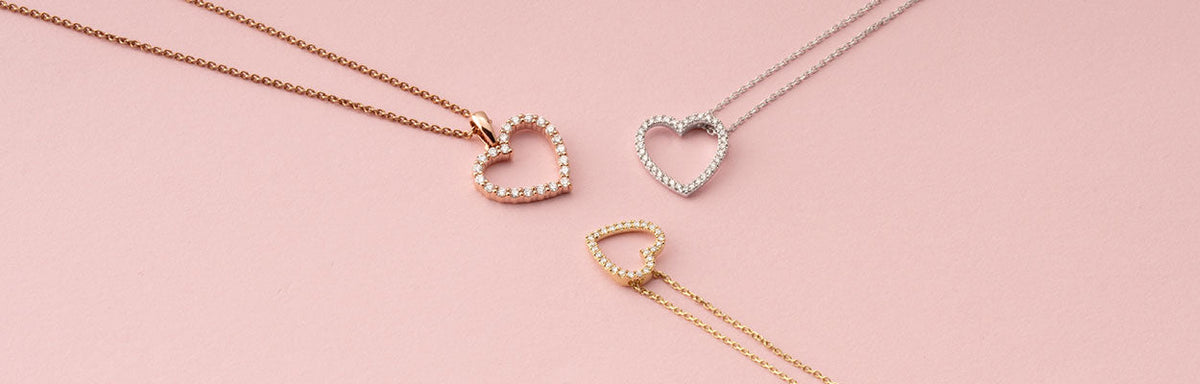
A Guide to Choosing Jewelry Colors - Gold, Silver, or Rose?
Which jewelry color suits me?
Many people ask themselves this question – whether when buying a new favorite ring, choosing an engagement or wedding ring, or when looking for a gift for a loved one. Gold, silver, rose gold: Every precious metal has its own unique charm – and its own effect on your look.
In this guide, we show you how to find the right metal color for yourself (or for someone else) – with practical tips, stylistic recommendations, and small insights from our many years of experience in the jewelry trade.
The classic question: Gold or silver?
Traditionally, the rule of thumb was: people with cool skin undertones tend to go for silver, while warm skin types are especially flattered by yellow gold. This orientation can still be helpful today – but it doesn't have to be seen as a hard-and-fast rule. After all, the world of jewelry has evolved: what was once considered a fashion "no-go" is now a deliberate stylistic clash. Mixing different metal colors has long been a trend – and it allows for the discovery of entirely new combinations.
To still find an initial direction, it is worth taking a look at the so-called undertones of your skin. Those who can see blue or purple veins on the inside of their wrist and tend to get sunburned easily usually have cool undertones. Silver jewelry often looks particularly clear and elegant on this skin. People with green veins, an olive complexion, or a natural tan tend to have warm undertones – gold shines particularly vibrantly and warmly on them. And if you're not quite sure? Then you are likely one of the neutral types – and you can consider yourself lucky: almost all metal colors suit you.

Rose gold – the harmonious middle ground
In recent years, rose gold has evolved from a fashion trend into a true classic. The delicate, pink-tinted hues flatter almost every skin tone, look soft yet modern – and can be excellently combined with white or yellow gold. Especially for special occasions such as anniversaries, weddings, or romantic evenings, rose gold enjoys great popularity. It lends a certain gentleness to every look and sets stylish accents without being intrusive.
Rose gold is particularly suitable for people who cannot decide between the classic tones – or who are consciously looking for something unique. Especially in combination with gemstones such as morganite, diamonds, or rubies, a soft contrast is created that appears romantic, yet mature.
Jewelry color and style – what suits me?
Besides skin and hair tones, your personal style also plays a central role. Do you like clear lines, monochromatic looks, or business outfits? Then cool silver or white gold usually looks particularly harmonious. Those who often wear warm colors, earth tones, or vintage-inspired fashion, on the other hand, often harmonize better with yellow gold or rose gold.
Important: Do not just let yourself be guided by recommendations; trust your own feelings. Jewelry is always an expression of your personality. Some people perceive silver as cool and distant, while others view it as minimalist and modern. For some, gold can appear luxurious and warm, but for others, it can quickly seem too festive or dominant. Try on different shades consciously – ideally in daylight – and observe how your facial expression changes. Often, a single look in the mirror reveals more than any theory.
Combining jewelry – dare to be diverse
The supposed rule that you shouldn't wear silver and gold together is long outdated. On the contrary: the conscious combination of different metals is considered particularly stylish today. Whether you layer rings in different tones, wear multi-strand necklaces in contrasting colors, or combine bracelets made of different metals – whatever you like is allowed.
Mixing jewelry colors works particularly well when done thoughtfully. A common design element – such as a similar cut, a recurring gemstone, or a uniform style – can help create a harmonious overall look. The arrangement also plays a role: for example, if you use rose gold as a connecting element between silver and gold, the transition will appear particularly soft.

Practical tips for choosing
If you are choosing jewelry for someone else – whether as a gift or for a special occasion like an engagement – it helps to take a look at the person's previous style. What colors do they wear frequently? Do they prefer clear lines or opulent designs? Observations of this kind usually provide reliable clues about their preferred metal tone.
The occasion can also play a role. For classic wedding rings, yellow or white gold is often chosen – both variants stand for timelessness and durability. Those looking for something more individual go for rose gold or combine two colors in one ring. For engagement rings or statement jewelry, additional individual settings and gemstones offer even more ways to express personal style.
And last but not least, the budget should also be taken into account: gold – especially in high alloys – is usually more expensive than silver. Silver is excellent for initial pieces of jewelry or fashionable accessories, while gold is chosen more for long-lasting, valuable pieces of jewelry.

Our recommendation: Try it out
In the end, only one thing counts: your feeling while wearing it. Take your time to test different metal colors – ideally directly on your skin. What looks natural? What do you feel comfortable in? Often, you discover surprising preferences during this process – for example for rose gold, even though you always considered yourself a "silver type."
In our assortment, you will find jewelry pieces in gold, silver, and rose gold – individually or in combination, minimalist or opulent. We would be happy to advise you personally to find exactly the jewelry color that underlines your personality and makes your appearance glow.


