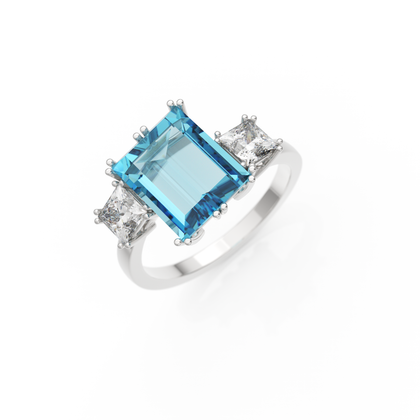

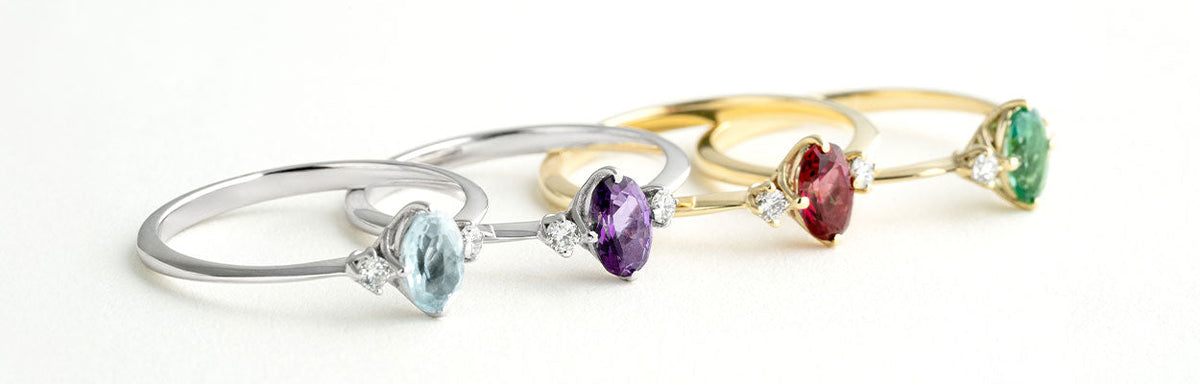
Gemstones have fascinated people for millennia – with their variety of colors, their luster, their rarity, and their symbolic meaning. They are considered signs of luxury, love, success, or spirituality and are an integral part of the world of jewelry. However, not every sparkling stone is automatically a gemstone – and not every gemstone is suitable for jewelry making.
In fact, there are more than 4,000 different minerals known worldwide, of which about 130 to 150 are classified as gemstones or ornamental stones. However, only a fraction of these are actually of importance in the professional jewelry trade. Most rings, necklaces, bracelets, or earrings are made with a handful of established gemstones – they combine beauty, durability, and wearability in an ideal way. In this article, we introduce you to the 10 most popular gemstones in the jewelry trade – including their properties, colors, and significance.
What exactly is a gemstone?
Gemstones are natural minerals, mineral conglomerates, or organic materials (such as amber or pearls) that are defined by their visual beauty, their rarity, their chemical stability, and their hardness.
To qualify as a gemstone, three essential criteria must be met:
Aesthetics – Color, brilliance, transparency, and light reflection must be exceptional.
Rarity – Gemstones are formed under very specific conditions, which makes them valuable.
Hardness and durability – Only robust stones are suitable for processing into durable jewelry.
The hardness of a gemstone is measured on the Mohs scale (from 1 to 10). Particularly for rings and other heavily used pieces of jewelry, stones should have a hardness of at least 7.
Although the term "gemstone" was previously used exclusively for particularly hard and rare stones such as diamond, ruby, sapphire, and emerald, this distinction has relaxed today. So-called semi-precious stones – such as amethyst, citrine, or peridot – are also firmly established in the high-quality jewelry trade and are equally valued.
The 10 most important gemstones for jewelry
1. Diamond – the classic for eternity
The diamond is considered the most valuable and well-known gemstone of all. It is the hardest natural material on earth (hardness level 10) and symbolically stands for eternity, purity, and constancy. Especially for engagement rings, the diamond is the undisputed number one. In addition to its hardness, it is primarily the extraordinary light refraction that makes the diamond so coveted. When professionally cut, the famous sparkle ("fire") and the high brilliance are created, making it look unique.
The diamond is best known as colorless, but so-called "fancy diamonds" also appear in yellow, pink, blue, or black. Depending on the cut – e.g., brilliant, princess, or emerald cut – it unfolds its own unique light effect.

2. Ruby – fiery elegance in red
The ruby belongs to the corundum group and is one of the hardest gemstones after the diamond (hardness 9).
Its bright red color is caused by traces of chromium in the crystal – depending on the amount, the color spectrum ranges from light rose red to deep carmine red. Particularly prized are rubies with an intense, pure, and uniform coloration without visible inclusions.
Rubies symbolically stand for passion, love, and life energy. They have been worn as a protective stone since antiquity and were considered a symbol of courage and strength. Due to their excellent hardness and brilliance, rubies are excellently suited for durable jewelry – especially in rings or pendants that are worn daily.

3. Sapphire – much more than just blue
The sapphire is also a corundum and is therefore just as hard and resistant as the ruby. Sapphires in deep blue are the most well-known, but they also come in yellow, pink, orange, violet, or green – only the red variety of corundum is called a ruby – all other colors belong to the sapphire family.
Sapphires symbolize truth, loyalty, wisdom, and protection. In many cultures, they are considered royal gemstones, which is why they can be found in numerous crown jewels.
Thanks to their hardness, sapphires are excellent for everyday jewelry, especially for engagement rings, wedding rings, stud earrings, and elegant necklaces. Their resistance makes them ideal companions for eternity – whether in a classic cut or modern settings.

4. Emerald – nature’s green miracle
The emerald belongs to the beryl family and fascinates with its intense, vibrant green. This color is created by tiny traces of chromium and vanadium in the crystal. Emeralds are slightly softer than diamonds or sapphires (hardness approx. 7.5–8 on the Mohs scale), yet are durable and suitable for everyday wear.
In jewelry, they are considered a symbol of growth, hope, and renewal. Because of their natural inclusions – also known as "jardin" – every emerald is unique and appears full of life. Emeralds have been coveted gemstones for centuries, worn in rings, necklaces, and earrings. Their intense color makes them a timeless classic with a touch of luxury and mystery.

5. Amethyst – the royal purple
The amethyst, a violet variety of quartz, delights with its deep and versatile color palette ranging from delicate lavender to intense purple. It has been prized since antiquity as a stone of serenity, spirituality, and inner strength.
With a hardness of about 7, it is robust enough for everyday jewelry, and particularly noble and elegant. Amethysts are popular in rings, necklaces, or earrings, with the color varying depending on the cut and light.
Its popularity in the jewelry trade is not only due to its beauty but also its good availability and affordable price, which makes it attractive to many customers.

6. Topaz – versatile gemstone with radiance
The topaz is known for its great variety of colors, ranging from clear blue to yellow, pink, and even rare red and violet tones. Blue topaz, in particular, is very popular in the jewelry trade.
With a hardness of about 8, the topaz is robust and excellent for rings, pendants, and stud earrings. Symbolically, the topaz stands for friendship, loyalty, and purity.
Its clear transparency and intense luster give jewelry pieces a fresh and noble appearance. Due to its wide color palette and good availability, the topaz offers the right piece of jewelry for almost every taste.

7. Peridot – the green glow
Peridot is a bright green gemstone, known primarily for its warm, sunny color. It belongs to the olivine family and is characterized by a hardness of 6.5 to 7.
Its olive-green hue, which varies slightly depending on the origin, is particularly characteristic. Peridot has always been prized as a symbol of protection, health, and prosperity.
Its warm color makes it a popular choice for fresh, vibrant jewelry, and it shines particularly bright in combination with yellow gold.
Despite its relative softness, this gemstone is popular in rings, pendants, and earrings – though the pieces should be handled with care to avoid scratches.

8. Opal – nature’s play of colors
The opal is a gemstone full of surprises: depending on its region of origin, its color varies from deep black with vibrant red accents to a soft, milky white with delicate color reflections. Its famous play of color – known as opalescence – makes the stone glow in constantly changing nuances, making every opal a one-of-a-kind piece.
These gemstones have always represented beauty, change, and individuality. Their vibrant play of color is reminiscent of the shimmering of water or the gleam of morning mist in sunlight – fascinating and never quite tangible.
Although opals are somewhat softer than many other gemstones, their unique radiance makes them coveted jewelry stones. In pendants, rings, or earrings, they provide special accents and lend every piece an almost magical depth.

9. Citrine – sunny yellow joy of life
The citrine is a yellow to golden-brown variety of quartz and brings immediate good cheer with its warm color. It owes its name to the French word for "lemon," and just like it, the citrine radiates freshness and vitality.
Citrines symbolize optimism, joy of life, and success. They are considered true mood-boosters and are often associated with positive energy and inner strength – perfect companions for a powerful fresh start.
Thanks to its good hardness and transparency, the citrine is an ideal gemstone for jewelry of all kinds – whether as a solitaire in a ring, in sparkling earrings, or as a radiant accent in necklaces and bracelets.

10. Tourmaline – the gemstone of colors
Hardly any other gemstone is as colorful as the tourmaline. From deep black to pink, blue, and green, all the way to multicolored varieties – the tourmaline surprises with an incredible diversity.
Tourmalines stand for protection, self-confidence, and balance. They are considered energetic gemstones meant to ward off negative influences and promote harmony. Each color is associated with its own meaning – green tourmalines, for example, with healing and vitality.
These gemstones inspire not only with their variety of colors but also with their versatility in design – tourmalines offer countless creative possibilities. Their individuality makes them the perfect choice for those who are looking for something special.